
Versuchswagen
VIN 92A0410010
Introduction
COA
The 924-Bodied 944s
Provenance
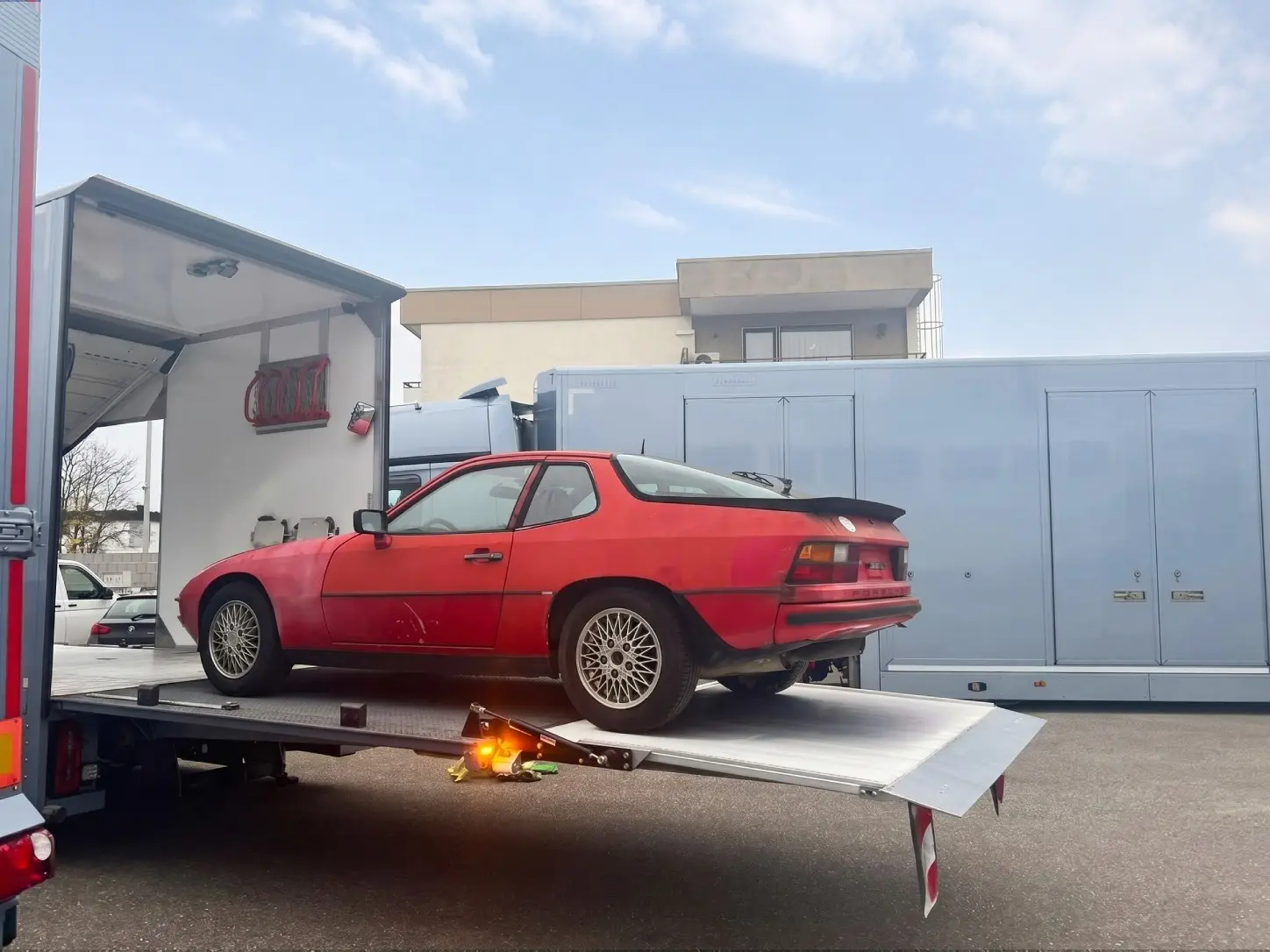
#0010 is a true survivor. Not only did it escape the crusher, but it was tracked down and saved by Manfred Freisinger Sr., best known for rescuing the 901 convertible prototype in 1967. #0010 spent 22 years in his collection before being purchased by its current owner in 2021.
#0010 will need a full restoration, but benefits from being rust-free as per a 30-page Classic Data Report commissioned by Porsche Böblingen. #0010 is currently in storage outside Stuttgart.
Taking offers. Please contact Kevin should you have any questions at 904 866 6007 / kevin@lenoirautomotive.com


Further information
The term “unique opportunity” is loosely thrown around when it comes to the collector car market. However, in this case there is really nothing that compares with an opportunity to acquire a true Porsche test vehicle that should have ceased to exist 46 years ago.
92A0410010 not only survived the crusher, but thanks to one of the most prolific collectors of Porsche prototypes and race cars, Manfred Freisinger Sr., #0010 was tracked down and tucked away in his collection for 22 years until being purchased 5 years ago and placed in storage in Eberhardzell, not far from Stuttgart, where it still resides.We have included a technical section so that one can truly appreciate what it took Porsche R&D to take a base 924 and transform it into a 944. One can then appreciate that these 924-bodied prototypes had nothing to do with the 1986-debuted 924 S, which even in its last year of production had a detuned 944 engine.
On the contrary, #0010 was registered as a 924 on July 7th, 1980, with full 944 specs, 2449cm³ and KW120/5800 with the same top speed of 220 km/h, as noted in its legally binding German “Fahrzeugbrief,” or registration. This is a far cry from its previous 924 base specs.
It should be noted that the cutting, welding, and fabrication described, needed to fit the 944 drivetrain into a 924 body, was done prior to #0010 being painted by the factory. #0010 was also optioned with M666, or cosmoline delete, in line with its intended purpose.
Additionally, it was optioned with the 63 Ah heavy-duty battery (M597) to give greater reserve current for test equipment.
Though not optioned, #0010 was also fitted with a 260 km/h 924 Turbo speedometer as well as a Turbo rear spoiler.
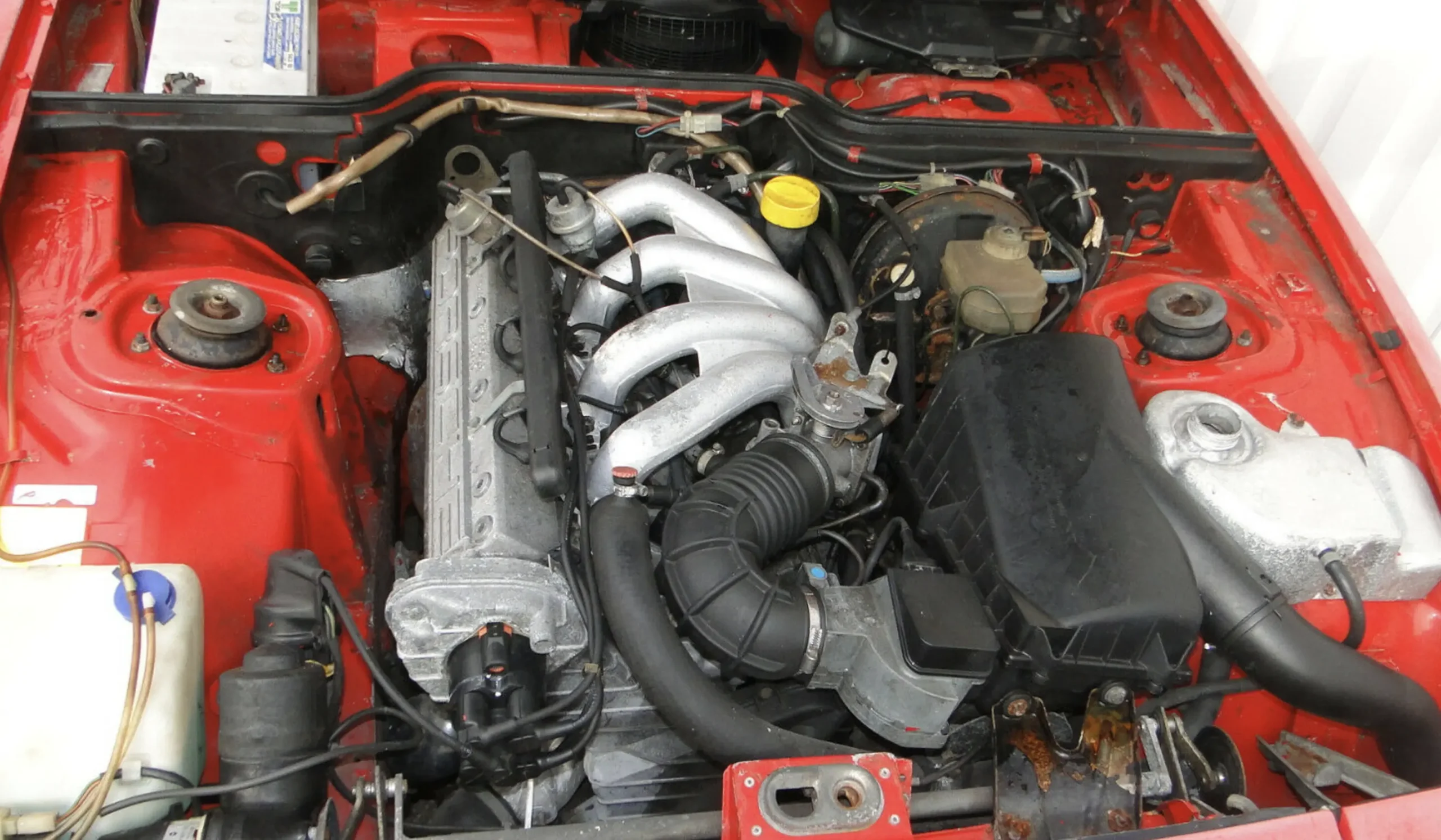
Most notably, #0010 still retains its foil-wrapped coolant reservoir, consistent with established automotive engineering practice of using foil as a radiant heat barrier for heat-sensitive components in high-load testing environments.
#0010 needs a complete restoration, but as laid out in a 30-page Data Classic report, it has no rust, not even in the wheel arches. Porsche Böblingen, on the outskirts of Stuttgart, did the Classic Technical Certificate, and they arranged for Data Classic to do a more thorough report on the condition of #0010. The report is available to those interested in acquiring this true survivor and piece of Porsche history.
Feel free to reach out should you have any questions @ +1 904 866 6007 or kevin@lenoirautomotive.com
Kevin Gerlach
St Marys, Georgia
Lenoir Automotive specializes in finding the needles in the haystack. Here are some of our past sales: https://bringatrailer.com/member/traumfabrik/
Technical.pdf
Installing a Porsche 944 Engine and Transmission into a Standard Porsche 924
Installing a Porsche 944 engine and transmission into a standard Porsche 924 is one of the most demanding transaxle Porsche conversions. Although the cars share similar styling, their chassis, suspension, drivetrain, and engine mounting systems were engineered differently, making this far more than a simple bolt-in swap. By comparison, chassis 92A0410010 differs from the 1986 924 S, which used a 924 body specifically configured for the 944 powertrain.
Engine Mounts & Crossmember
This offers a window into what Porsche engineers had to contend with when installing the 944 powertrain into #0010.
The greatest challenge is adapting the 944 engine to the 924 chassis. The early 924 uses a steel crossmember that bolts to the subframe rails and carries the front control arms and steering rack — but the engine itself does not mount to the crossmember at all. Instead, the 924’s engine hangs from two steel tabs bolted directly to the engine block, which connect to mounting tabs in the engine bay and body structure. The 944, by contrast, employs a completely different aluminum crossmember, with the engine sitting directly on top of it via two mounts. As a result, the engine cannot simply be installed without extensive modification.
The conversion typically requires cutting, welding, fabrication of custom engine mounts, modification or replacement of the front crossmember, repeated trial fitting, and precision measurement to correctly align the engine with the torque tube. Even slight misalignment can result in driveline vibration, clutch problems, and premature component wear.
Transmission, Driveline, Electronics & Suspension
Installing the 944 transmission alongside the 944 engine introduces an additional layer of complexity. The 944 transaxle — comprising the gearbox, final drive, and differential housed at the rear of the car — differs from the 924 unit in its casing dimensions, mounting points, gear ratios, and output shaft configuration. The 924’s transmission tunnel, rear subframe mounts, and transaxle crossmember must all be assessed for compatibility and modified accordingly to accept the 944 unit.
The torque tube connecting the engine to the transaxle must be correctly matched to both the 944 engine’s bellhousing and the 944 transmission’s input flange. Clutch diameter, spline count, and release mechanism must all be compatible across the complete 944 drivetrain combination. Precise alignment between the crankshaft, torque tube, and transmission input shaft is critical throughout. CV joints, axle lengths, and half-shaft specifications must be verified against the 944 transaxle’s output dimensions, as these will differ from the original 924 components.
The conversion also requires integrating the 944’s Bosch Motronic engine management system — including the ECU, wiring harness, sensors, relays, and electronic fuel injection — effectively rewiring much of the front half of the car. Additional modifications are often required to the steering system, sway bar, accessory brackets, and front suspension to provide adequate clearance and support for the larger, heavier engine.
Summary
Contact: service@lenoirautomotive.com | +1 904 866 6007

Versuchswagen
VIN 92A0410010
Introduction
Introduction
COA
The 924-Bodied 944s
The 924-Bodied 944s
Provenance
#0010 is a true survivor. Not only did it escape the crusher, but it was tracked down and saved by Manfred Freisinger Sr., best known for rescuing the 901 convertible prototype in 1967. #0010 spent 22 years in his collection before being purchased by its current owner in 2021.
#0010 will need a full restoration, but benefits from being rust-free as per a 30-page Classic Data Report commissioned by Porsche Böblingen. #0010 is currently in storage outside Stuttgart.
Taking offers. Please contact Kevin should you have any questions at 904 866 6007 / kevin@lenoirautomotive.com
Technical.pdf
Installing a Porsche 944 Engine and Transmission into a Standard Porsche 924
Installing a Porsche 944 engine and transmission into a standard Porsche 924 is one of the most demanding transaxle Porsche conversions. Although the cars share similar styling, their chassis, suspension, drivetrain, and engine mounting systems were engineered differently, making this far more than a simple bolt-in swap. By comparison, chassis 92A0410010 differs from the 1986 924 S, which used a 924 body specifically configured for the 944 powertrain.
Engine Mounts & Crossmember
This offers a window into what Porsche engineers had to contend with when installing the 944 powertrain into #0010.
The greatest challenge is adapting the 944 engine to the 924 chassis. The early 924 uses a steel crossmember that bolts to the subframe rails and carries the front control arms and steering rack — but the engine itself does not mount to the crossmember at all. Instead, the 924’s engine hangs from two steel tabs bolted directly to the engine block, which connect to mounting tabs in the engine bay and body structure. The 944, by contrast, employs a completely different aluminum crossmember, with the engine sitting directly on top of it via two mounts. As a result, the engine cannot simply be installed without extensive modification.
The conversion typically requires cutting, welding, fabrication of custom engine mounts, modification or replacement of the front crossmember, repeated trial fitting, and precision measurement to correctly align the engine with the torque tube. Even slight misalignment can result in driveline vibration, clutch problems, and premature component wear.
Transmission, Driveline, Electronics & Suspension
Installing the 944 transmission alongside the 944 engine introduces an additional layer of complexity. The 944 transaxle — comprising the gearbox, final drive, and differential housed at the rear of the car — differs from the 924 unit in its casing dimensions, mounting points, gear ratios, and output shaft configuration. The 924’s transmission tunnel, rear subframe mounts, and transaxle crossmember must all be assessed for compatibility and modified accordingly to accept the 944 unit.
The torque tube connecting the engine to the transaxle must be correctly matched to both the 944 engine’s bellhousing and the 944 transmission’s input flange. Clutch diameter, spline count, and release mechanism must all be compatible across the complete 944 drivetrain combination. Precise alignment between the crankshaft, torque tube, and transmission input shaft is critical throughout. CV joints, axle lengths, and half-shaft specifications must be verified against the 944 transaxle’s output dimensions, as these will differ from the original 924 components.
The conversion also requires integrating the 944’s Bosch Motronic engine management system — including the ECU, wiring harness, sensors, relays, and electronic fuel injection — effectively rewiring much of the front half of the car. Additional modifications are often required to the steering system, sway bar, accessory brackets, and front suspension to provide adequate clearance and support for the larger, heavier engine.
Summary
Installing a 944 engine and transmission into a standard 924 is not simply a component replacement — it is a complete engineering project. The most demanding work centers on redesigning the engine mounting system, adapting the rear transaxle installation, and correctly aligning the entire drivetrain from crankshaft to rear wheels. Success requires cutting, fabrication, welding, precision measurement, and significant mechanical and engineering expertise.
Further
information
The term “unique opportunity” is loosely thrown around when it comes to the collector car market. However, in this case there is really nothing that compares with an opportunity to acquire a true Porsche test vehicle that should have ceased to exist 46 years ago.
92A0410010 not only survived the crusher, but thanks to one of the most prolific collectors of Porsche prototypes and race cars, Manfred Freisinger Sr., #0010 was tracked down and tucked away in his collection for 22 years until being purchased 5 years ago and placed in storage in Eberhardzell, not far from Stuttgart, where it still resides.We have included a technical section so that one can truly appreciate what it took Porsche R&D to take a base 924 and transform it into a 944. One can then appreciate that these 924-bodied prototypes had nothing to do with the 1986-debuted 924 S, which even in its last year of production had a detuned 944 engine.
On the contrary, #0010 was registered as a 924 on July 7th, 1980, with full 944 specs, 2449cm³ and KW120/5800 with the same top speed of 220 km/h, as noted in its legally binding German “Fahrzeugbrief,” or registration. This is a far cry from its previous 924 base specs.
It should be noted that the cutting, welding, and fabrication described, needed to fit the 944 drivetrain into a 924 body, was done prior to #0010 being painted by the factory. #0010 was also optioned with M666, or cosmoline delete, in line with its intended purpose.
Additionally, it was optioned with the 63 Ah heavy-duty battery (M597) to give greater reserve current for test equipment.
Though not optioned, #0010 was also fitted with a 260 km/h 924 Turbo speedometer as well as a Turbo rear spoiler.
Most notably, #0010 still retains its foil-wrapped coolant reservoir, consistent with established automotive engineering practice of using foil as a radiant heat barrier for heat-sensitive components in high-load testing environments.
#0010 needs a complete restoration, but as laid out in a 30-page Data Classic report, it has no rust, not even in the wheel arches. Porsche Böblingen, on the outskirts of Stuttgart, did the Classic Technical Certificate, and they arranged for Data Classic to do a more thorough report on the condition of #0010. The report is available to those interested in acquiring this true survivor and piece of Porsche history.
Feel free to reach out should you have any questions @ +1 904 866 6007 or kevin@lenoirautomotive.com
Kevin Gerlach
St Marys, Georgia
Lenoir Automotive specializes in finding the needles in the haystack. Here are some of our past sales: https://bringatrailer.com/member/traumfabrik/
Contact: service@lenoirautomotive.com
+1 904 866 6007